18 years ago today, the Qinghai-Tibet Railway line was opened, connecting the northwestern Chinese city of Xining in Qianghai Province with the capital of Tibet, Lhasa. It is the highest railway line on Earth, with over 960 km (600 mi) of track being more than 4,000 meters (13,123 ft) above sea level. It’s considered one of China’s greatest 21st-century successes, as the railway faced numerous engineering challenges. READ all about the world’s highest line… (2006)nnnn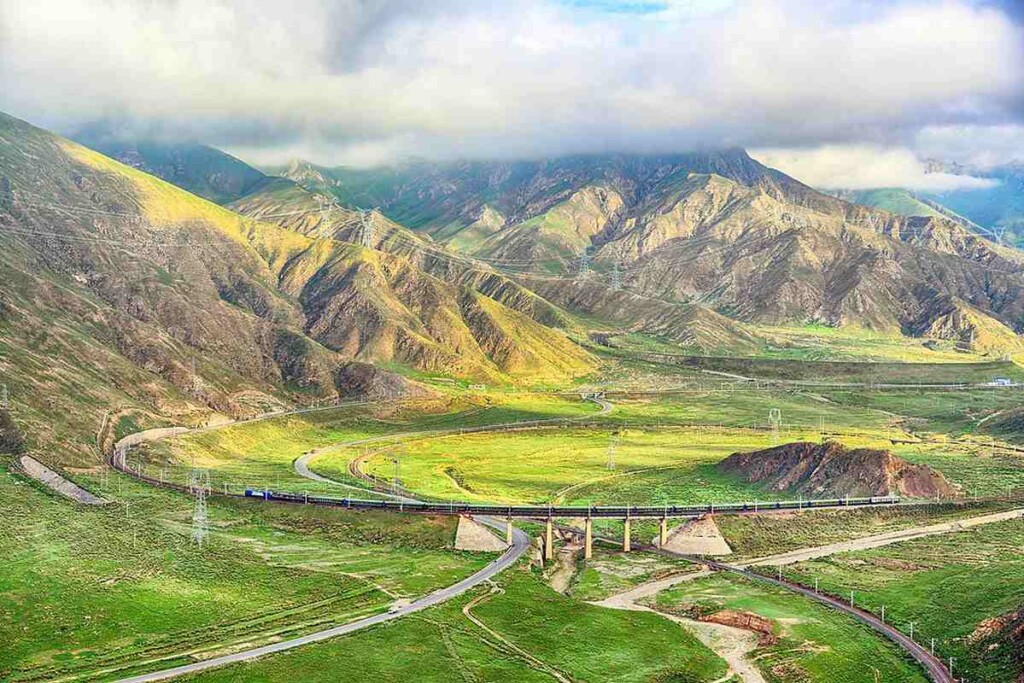
- n
- Willie Dixon, the blues singer and guitarist called ‘the poet laureate of the blues’, who wrote more than 500 songs, some of them timeless classics, was born (1915)
- The Medicare federal insurance program for health care went into effect in the U.S. (1966)
- Sony introduced the Walkman, the first portable audio cassette player, and though they predicted it would sell about 5,000 units a month, it sold more than 50,000 in the first two months and over the next 30 years more than 385 million Walkmans in cassette, CD, mini-disc and digital file versions, until the arrival of Apple’s iPod (1979)
- Vermont’s civil unions law went into effect (2000)
- 500,000 people marched in Hong Kong to protest a new anti-subversion law…. one year later, 530,000 rallied for democratization and universal suffrage (2003)
- For the first time in history, the U.S. Navy promoted a woman, Adm. Michelle J. Howard—also the first African-American—to become a four-star admiral (2014)
- Today is Canada Day, a national holiday celebrating Canada’s founding, and the date in 1980 when the song, O, Canada, became the national anthem.
- It is also Independence day in Somalia (1960); Rwanda (1962); and Burundi (1962)
n
n
n
n
n
n
n
n
n nn34 years ago, Germany reunited, with East and West merging their economies under the Deutsche Mark currency. Western countries helped carry the burden, granting subsidies to pay East German bills and ease the budget gap. (1990)nnOn this day in 1957, the International Geophysical Year was launched by 67 countries to cooperate in the scientific study of the Earth. A global project that became a resounding success, it marked the end of a long Cold War period devoid of scientific interchange between East and West.
 nnThe IGY encompassed eleven Earth sciences, including meteorology, oceanography, seismology, geomagnetism, gravity, ionospheric physics, precision mapping, and solar activity. The timing of IGY was particularly beneficial since it covered the high point of the eleven-year cycle of sunspot activity. Significant achievements included: Both the Soviet Union and the U.S. launched artificial satellites, including the Soviet Union’s Sputnik 1, the first ever to be successful. Also notable were the discovery of the Van Allen radiation belts by Explorer 1, the defining of mid-ocean submarine ridges, which confirmed plate tectonics, and the detection of hard solar corpuscular radiation that could be highly dangerous for manned space flight.
 nnHow did the IGY come about? On April 5, 1950, a small group of scientists gathered to meet with a visiting scientist from England. The men, all geophysicists, discussed the complexity of Earth’s oceans, atmosphere, magnetism, and the role of the sun. They agreed that with all the new tools available, such as rockets, radar, and computers, perhaps it was time for a coordinated, worldwide study of Earth’s systems. Two years later, the International Council of Scientific Unions proposed a comprehensive series of global geophysical activities to span the period July 1957-December 1958. The IGY still lives today in international collaborations.nn128 years ago today, Wilfrid Laurier was sworn in as Canada’s first French-speaking prime minister. Recognized as either the greatest leader Canada has ever enjoyed, or thereabouts, Laurier’s unprecedented and unsurpassed tenure of 15 consecutive years as prime minister was marked by his sincere devotion to maintaining neutrality between English and French-speaking Canadians, as well as making the country as independent from the UK as possible. nn
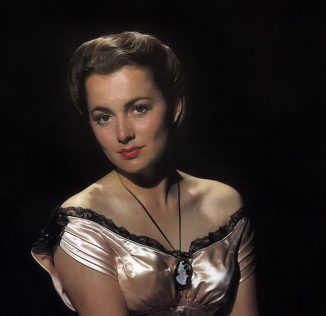 Also, on this day 107 years ago, one of the longest-living movie stars from the Golden Age of Hollywood, Olivia de Havilland was born. Best remembered as Melanie in Gone With the Wind, she’s one of the few to have won two leading-actress Oscars. Her 1944 lawsuit against Warner Bros. helped bring down the studio system that treated actors as property, giving them no decision-making powers in their own careers.
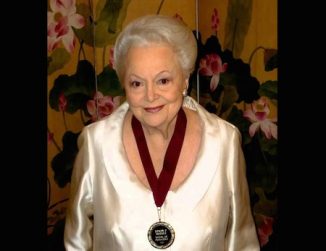 nnShe played opposite Errol Flynn in 8 films, including The Adventures of Robin Hood, earned Academy Awards for To Each His Own (1946) and The Heiress (1949), and won praise for her portrayal of mental illness in The Snake Pit (1948)—a film that led to changes in the conditions of mental institutions in the US.nnIn 1949, Herb Stein of Daily Variety wrote “Wisconsin is the seventh state to institute reforms in its mental hospitals as a result of The Snake Pit.” She wrote a book about her Hollywood escapades, and falling in love with a Frenchman, with Every Frenchman Has One. She died of natural causes at her Paris home in 2020.nnHappy 72nd Birthday to Dan Aykroyd, the Canadian comedian from the originalnSaturday Night Live cast who rocketed to fame with The Blues Brothers, Trading Places, and Ghostbusters, and was nominated for an Oscar for his supporting role in Driving Miss Daisy.nnBorn with different colored eyes and webbed toes, he planned on becoming a Catholic priest until age 17—but has maintained an interest in spiritualism and paranormal activity to this day. WATCH some of his best comic moments, Julia Child bleeding out…nn
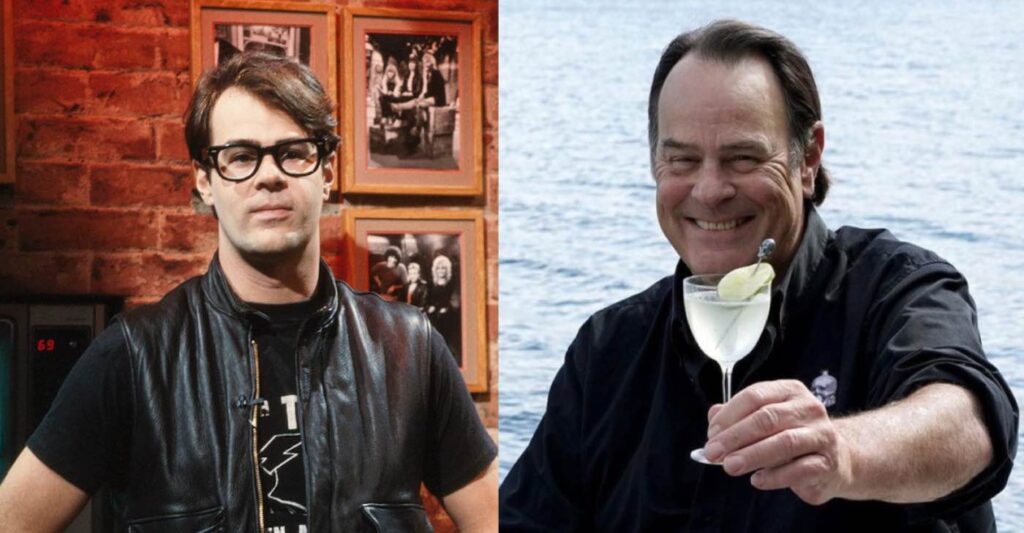 nnIn 2007, businessman Aykroyd co-founded Crystal Head Vodka, a brand of high-end locally-sourced corn vodka known for its distinctive skull-shaped bottle and being filtered seven times through Herkimer diamond crystals, distilled four times, and blended with water from Newfoundland.nnIn 1992, Aykroyd and Hard Rock Cafe co-founder Isaac Tigrett founded the House of Blues, a chain of music venues, with the mission to promote African-American blues music and folk art. From its single location in Cambridge, Massachusetts, they expanded to New Orleans—and by 2004, it became the second-largest live music promoter in the world, with seven venues and 22 amphitheaters in the US and Canada, and was purchased by Live Nation in 2006.nnWith his birthday on Canada Day, Aykroyd maintains his maple leaf roots as a longtime resident of Sydenham, Ontario, alongside wife actress Donna Dixon whom he met on the set of Doctor Detroit. They appeared together in five films and have raised three daughters. He helped start the Blue Line Foundation, which is redeveloping flood-damaged lots in New Orleans and helping first responders buy them at reduced prices. (1952)nn[raw][/raw]nn[raw][/raw]nn nnSHARE the Milestones, Memories, and Music…