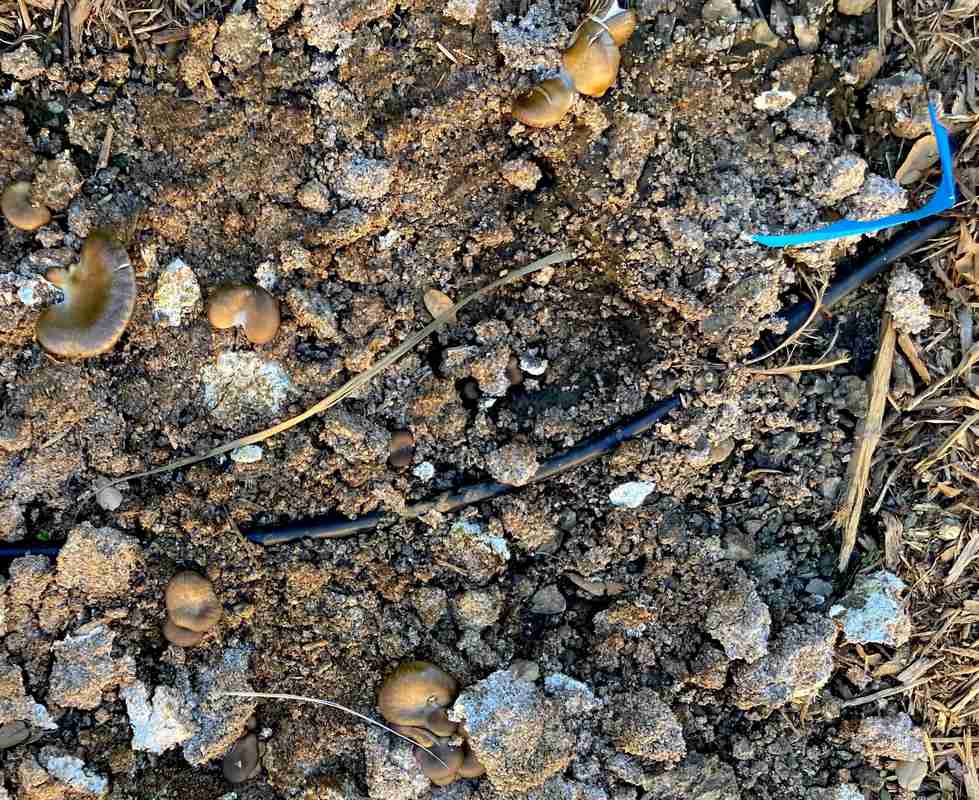
Mushrooms growing at a brownfield site in Los Angeles – credit Danielle StevensonnnAn environmental toxicologist in California is cleaning up areas contaminated with heavy metals or other pollutants using fungi and native plants in a win-win for nature.nnWhere once toxic soils in industrial lots sat bare or weed-ridden, there are now flowering meadows of plants and mushrooms, frequented by birds and pollinators: and it’s thanks to Danielle Stevenson.nnFounder of DIY Fungi, the 37-year-old ecologist from UC Riverside recently spoke with Yale Press about her ongoing work restoring ‘brownfields,’ a term that describes a contaminated environment, abandoned by industrial, extraction, or transportation operations.nnA brownfield could be an old railway yard or the grounds of an abandoned oil refinery, but the uniting factor is the presence of a toxic containment, whether that’s a petrochemical, heavy metal, or something else.nnNoting that she had read studies about mushrooms growing around the Chernobyl nuclear plant, she came to understand further, through her work, that fungi are an extraordinarily resilient species of life that consume carbon, and even though petroleum products are toxic to plants, to mushrooms they are essentially a kind of carbon.nnIn fact, mushrooms break down several categories of toxic waste with the same enzymes they use to consume a dead tree. They can also eat plastic and other things made out of oil, like agrochemicals.nnAt the Los Angeles railyard, as part of a pilot project, Stevenson and colleagues planted a variety of native grass and flower species alongside dead wood that would incubate specific fungi species called arbuscular mycorrhizal fungi, which assists plants in extracting heavy metals like lead and arsenic from the soil.nnAlongside traditional decomposer fungi, the mixture of life forms demonstrated tremendous results in this brownfield.nn“In three months we saw a more than 50 percent reduction in all pollutants. By 12 months, they were pretty much not detectable,” Stevenson told Yale 360.nnMORE GREAT MUSHROOM USES: Scientists Have Used Mushrooms to Make Biodegradable Computer Chip PartsnnDecontaminating soil like this typically involves bringing in a bulldozer and digging it all up for transportation to a landfill. This method is not only hugely expensive, but also dangerous, as contaminated material can scatter on the winds and fall out of the backs of trucks carting it away.nnBy contrast, the plants that draw out the toxic metals can be harvested and incinerated down to a small pile of ash before cheap transportation to a hazardous waste facility.nnThe technique, which Stevenson says has some scaling issues and issues with approval from regulators, is known officially as bioremediation, and she’s even used it to safely break down bags of lubricant-soaked rags from bicycle repair shops.nnALSO CHECK OUT: Hundreds of Solar Farms Built Atop Closed Landfills Are Turning Brownfields into Green Fieldsnn”People who live in a place impacted by pollution need to have a say in how their neighborhood is being cleaned up. We need to empower them with the tools to do this,” she said.nnSHARE This Woman’s Enterprising Idea For Mean Green Clean-Ups…