1,938 years ago today Antoninus Pious, the fourth of the Five Good Emperors of Rome, was born. Keeping in mind that ‘good’ in this case did not mean morally upright, but rather effective. But the 23 years of the Principate under Antoninus Pious were probably the most peaceful in its 400-year history, and there are no records of him ever leading an army in anger. Instead, he was an effective administrator, leaving his successors a large surplus in the treasury, expanding free access to drinking water throughout the Empire, encouraging legal conformity, and facilitating the enfranchisement of freed slaves. READ more… (89)nnnn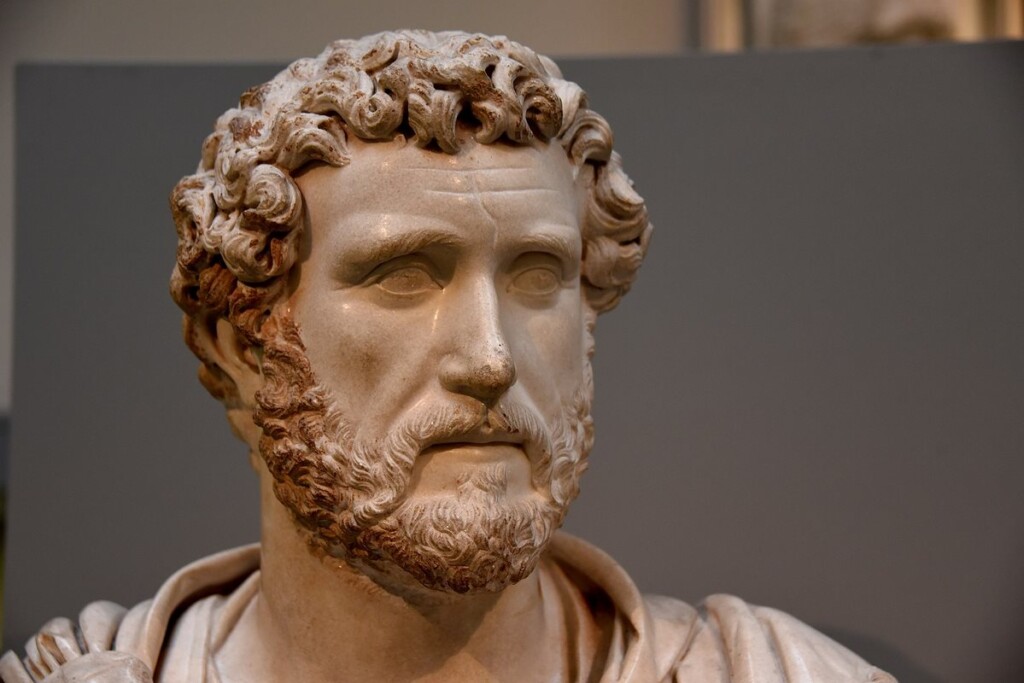
- n
- American colonial soldiers won the first Battle of Saratoga during the Revolutionary War (1777)
- New Zealand law bestowed upon all women in their nation the right to vote (1893)
- Neil Young released his third album, After The Gold Rush (1970)
- The emoticon was born when Carnegie Mellon University professor Scott Fahlman proposed punctuating computer messages with a colon-hyphen-parenthesis to make a “smiley face” (1982)
- Greg Louganis suffered a head injury while qualifying for the Seoul Olympics, before going on to win two Gold medals (1988)
- 33 years ago today, The Iceman, a well-preserved natural mummy of a man who lived around 3,300 BCE, was discovered by German tourists in an Alpine glacier, offering a rare glimpse into the abilities and lifestyle of men who lived in Europe 5,300 years ago (1991)
- Relief pitcher Mariano Rivera of the New York Yankees became Major League Baseball’s all-time saves leader with 602 games saved (2011)
- Shohei Ohtani hit three home runs and stole two bases for the Los Angeles Dodgers becoming the first Major League Baseball player to reach 50 HRs and 50 stolen bases in a single season (2024)
n
n
n
n
n
n
n
n
n49 years ago today, Fawlty Towers premiered on the BBC. John Cleese boldly stepped out into the situational comedy scene without the support of his legendary troupe, Monty Python, and created what the BBC considers “the British sitcom by which all other British sitcoms must be judged.” Capable of withstanding multiple viewings, the BBC continues, the show featuring John Cleese as a high-brow yet largely incompetent hotel owner is “eminently quotable, and stands up to this day as a jewel in the BBC’s comedy crown.” nn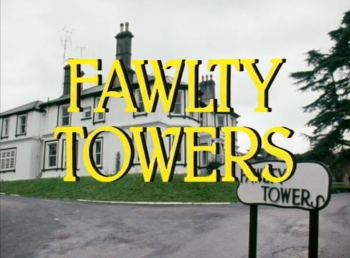 nnCo-written with Cleese by Connie Booth, the idea of the show came from Cleese after he stayed at the Gleneagles Hotel in Torquay, Devon in 1970 (along with the rest of the Monty Python troupe), where he encountered the eccentric hotel owner Donald Sinclair. Stuffy and snobbish, Sinclair treated guests as though they were a hindrance to his running of the hotel (a waitress who worked for him stated “it was as if he didn’t want the guests to be there”).nnJohn Cleese was fascinated with the behavior of the owner, Donald Sinclair, later describing him as “the rudest man I’ve ever come across in my life.” Among such behavior by Sinclair was his criticism of Terry Gilliam’s “too American” table etiquette and tossing Eric Idle’s briefcase out of a window “in case it contained a bomb.” Asked why would anyone want to bomb the hotel, Sinclair replied, “We’ve had a lot of staff problems.” Michael Palin states Sinclair “seemed to view us as a colossal inconvenience.”nnIn 1976 and 1980, Fawlty Towers won the British Academy Television Award for Best Scripted Comedy. In 1980, Cleese received the British Academy Television Award for Best Entertainment Performance, and, in a 2001 poll conducted by Channel 4, Basil Fawlty was ranked second on their list of the 100 Greatest TV Characters. (1975)nn[raw] [/raw]nn nn228 years ago today, George Washington’s farewell address to the nation was first published, which advised Americans to “Observe good faith and justice toward all nations. Cultivate peace and harmony with all.”nnThe letter from U.S. President George Washington to friends and fellow citizens after 20 years of public service was written near the end of his second term, before retiring to his home at Mount Vernon, Virginia.nn
 nnWarning Americans of the political dangers they must avoid if they are to remain true to their values, the 6088 words were reprinted in newspapers across the country, and later in pamphlet form.nnEight years after the adoption of the Constitution, he expressed his support for the federalist government form of republic, and offered valedictory advice. In modern times, the words, which had long been forgotten, were revitalized by the Broadway musical Hamilton in its song One Last Time, when lines are sung from the end of the Address.nnWashington, who had been so integral to the Revolution and founding of a nation, used the majority of the letter to offer advice as a “parting friend” on what he believed were the greatest threats to the nation.nnThe address expressed warnings about threats to “Republican liberty” and stressed to the public that their independence, peace at home and abroad, safety, prosperity, and liberty are all dependent upon unity among the states. He warned them that the union of states created by the Constitution will come under the most frequent and focused attacks by foreign and domestic enemies of the country, and advised the American people to be suspicious of anyone who seeks to abandon the concept, or break from the union. READ more and SEE a CBS video about the address… (1796)nn[raw][/raw]nn nnAnd 56 years ago today, Funny Girl premiered, with Barbara Streisand making her film debut in the Academy Award-winning role of Fanny Bryce. Her famous first line, “Hello, gorgeous,” became one of the most quoted movie lines ever. Directed by William Wyler (of Roman Holiday fame), Funny Girl is considered one of the greatest musical films ever produced, featuring notable songs “People (who need people)” and “Don’t Rain on My Parade”.nn
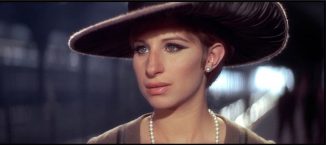 nnThe story is based on the life of Broadway star and comedian Fanny Brice, and her stormy relationship with gambling businessman Nicky Arnstein. Roger Ebert said Streisand exhibited “the best timing since Mae West, and is more fun to watch than anyone since the young Katharine Hepburn.” After winning the Oscar for Best Actress, Streisand’s first comment when handed the golden statuette was “Hello, gorgeous.” (1968)nn
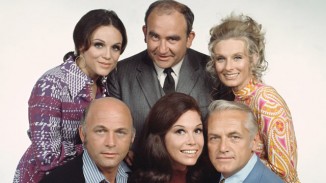 nnThe show won 29 Emmy Awards and changed sitcoms forever when it began discussing controversial topics in a humorous way. In the third season, equal pay for women, pre-marital sex, and homosexuality were woven into the show’s comedic plots, and later, marital infidelity and divorce.nnIn the final seasons, the show explored death (including the Chuckles the Clown funeral episode), juvenile delinquency, infertility, adoption, and Mary’s addiction to sleeping pills. The final episode became the gold standard for how to end a show. Today, you can watch full episodes for free on YouTube.nnWATCH a retrospective on the anniversary… (1970)nn[raw][/raw]nnSHARE the Milestones, Memories, and Movies…