
Rats With Tiny Backpacks Being Used to Sniff Out Wildlife Smugglers Trafficking in Animal Parts

Credit: Maria Anna Caneva Saccardo Caterina / APOPO (via SWNS)
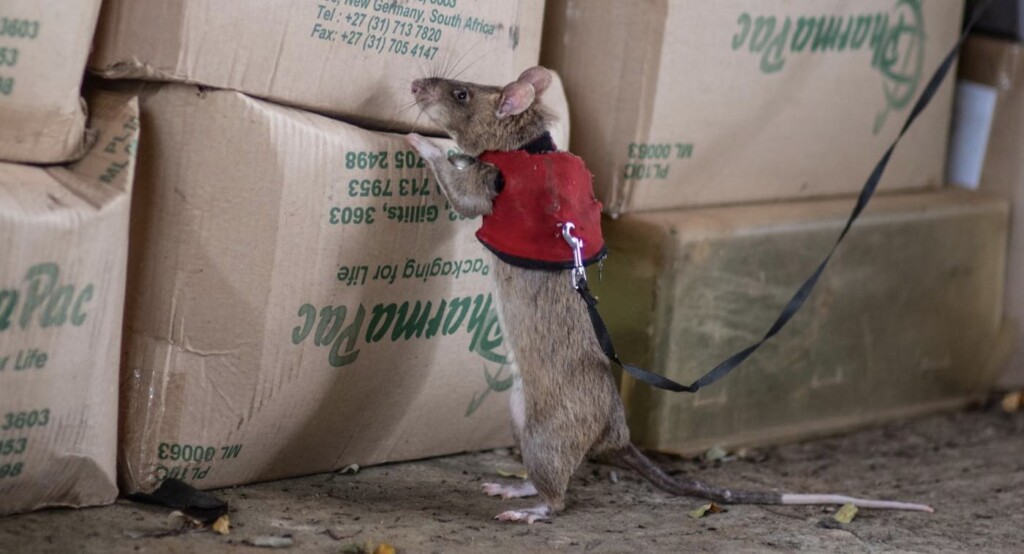
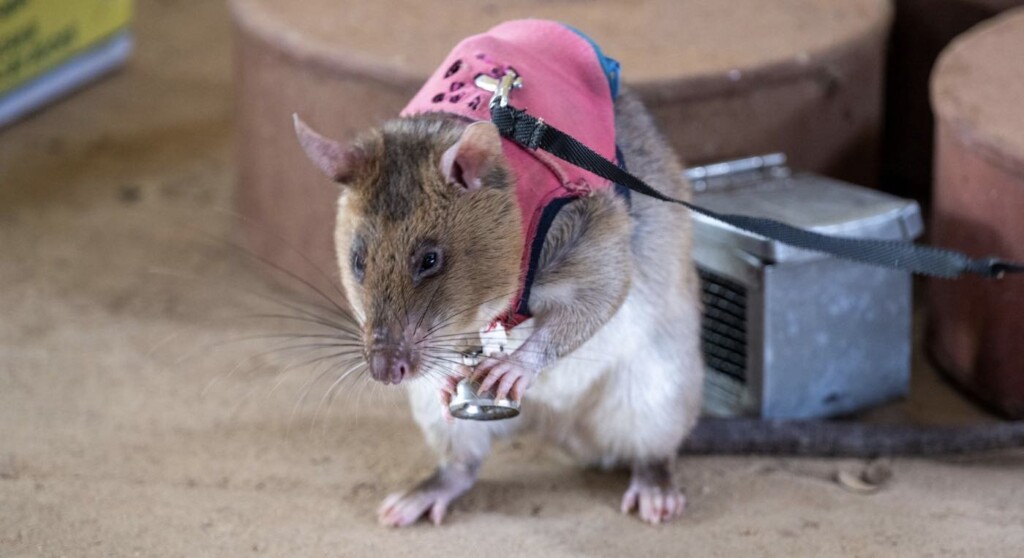
nnRats with tiny backpacks are being used to sniff out illegally trafficked wildlife items.nnAfrican giant pouched rats have been trained to recognize the scent of illegal animal parts such as elephant tusks and rhino horns.nnThe rodents had previously been used to detect explosives and tuberculosis, but a new scientific study has shown they could be equally successful in detecting illicit articles being smuggled.nnThe sixteen rats were trained to detect wildlife products inside shipping containers—and during the proof-of-principle phase they identified commonly trafficked wildlife items while in a controlled laboratory setting.nnIt was proven the rats could be trained to detect items such as pangolin scales and threatened African hardwood, even when hidden among other “smelly items” used by smugglers to conceal their presence.nnThe study published in Frontiers in Conservation Science showed the animals could quickly learn to wear a vest and trigger an electronic microswitch to remotely indicate when they had located a wildlife target while working in a mock port environment.nn
Rat using its microswitch by Maria Anna Caneva Saccardo Caterina / APOPO (via SWNS)
nnUpon finding items, they were rewarded with a food mixture loaded with avocado, banana, and crushed chow pellets.nnThe research was conducted by the Dutch foundation APOPO, founded in 1995 to protect people and the planet with innovative solutions using trained rats.nnRESCUE RODENTS: Rats Trained to Carry Tiny Backpacks Into Earthquake Zones – So Rescue Teams Can Talk to SurvivorsnnThe founder, Bart Weetjens, had been exploring solutions for the landmine problem, and as a rat pet owner, he came across a publication using gerbils as scent detectors. He consulted with Prof. Ron Verhagen, a rodent expert at the University of Antwerp, who believed that the African Giant Pouched rat was the best suited candidate, especially due to its average eight-year lifespan.nn“Rats have low training and maintenance costs, flexibly work with multiple handlers, have a long lifespan, and a sophisticated sense of smell,” said researchers at their training headquarters in Morogoro, Tanzania.nn“Their small size also offers unique capabilities for the screening of shipping containers, such as being able to navigate densely packed areas or be lifted to assess contents of sealed containers by screening ventilation systems.”nnSCHOLARLY RAT RESCUER: For the Last 20 Years, College Professor Has Been Helping Intelligent Lab Rats Find Good HomesnnThe research report concluded the trained rats could now be assessed for “operational feasibility of being deployed at ports”.nnSHARE THE BETTER MOUSE TRAP With Wildlife Lovers On Social Media…

Share the Post:

Related Posts