
Salmon Have Already Returned Far Upriver to Spawn in Historic Habitat After Nation’s Largest Dam Removal Project

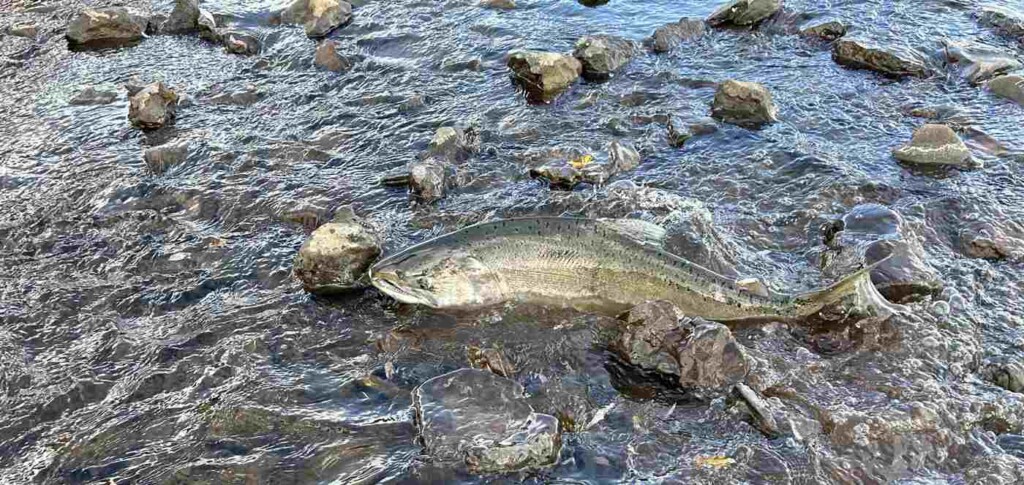
The first salmon to enter the upper Klamath River – credit Oregon Dept. of Fish and Wildlife, released
nnNot two months have passed since a series of four dams were demolished on the Klamath River, and salmon are already spawning in creeks and tributaries far upriver.nnIt’s the ultimate goal that a coalition of tribal, state, and federal government entities have campaigned for since the early 2000s.nnGNN reported on the dam demolition, concluded on October 2nd, and the subsequent return of salmon immediately from the ocean.nn“Seeing salmon spawning above the former dams fills my heart,” said Joseph L. James, chairman of the Yurok Tribe, the leaders of the dam removal campaign along with the Karuk and Klamath tribes.nn“Our salmon are coming home. Klamath Basin tribes fought for decades to make this day a reality because our future generations deserve to inherit a healthier river from the headwaters to the sea.”nnThe Klamath River is the third-largest salmon-spawning habitat on the West Coast. With headwaters gathering froth and force in the mountains of southern Oregon, it plunges down across northern California and ends 400 miles later in the Pacific Ocean.nnPacifiCorp owned four hydroelectric dams along the river for decades that had significantly lowered the water quality. They produced electricity for 70,000 homes, but didn’t provide irrigation, drinking water, flood control, or fish ladders to allow salmon substantial access to upstream habitats.nnThis month the Oregon Department of Fish and Wildlife recorded 115 spawning salmon arriving in a single day in the waters of Spencer Creek, above the J.C. Boyle Dam—the highest of the four removed.nnFISH RETURNING ELSEWHERE IN AMERICA: Maine Sets Records for Atlantic Herring and Salmon Runs in the Penobscot Rivernn“All in all, the fish that came up this year were really healthy,” Toz Soto, fisheries program manager with the Karuk Tribe, said during a press conference after the dams came down. “I didn’t see fish with bacterial infections and things like that, so water temperature’s already having an impact on the fish’s health.”nnThe reduction in water flow volume because of the dams made it unnaturally warm—sometimes too warm for these cold water species.nnMORE REWILDING RIVERS: Once Biologically Dead, London’s River Thames Rebounds – With Seahorses and SealsnnThe dams were erected 62 years ago, yet despite dozens of generations living and dying without access to their ancestral habitat, these remarkable fish found their way home almost as soon as the way was opened.nnSHARE This Final Chapter Of The Klamath Story With Your Friends… 

Share the Post:

Related Posts