‘Meadowmaker’ Flowers Herald Return of Rare Bumblebee in England After Scenic Meadows Restored

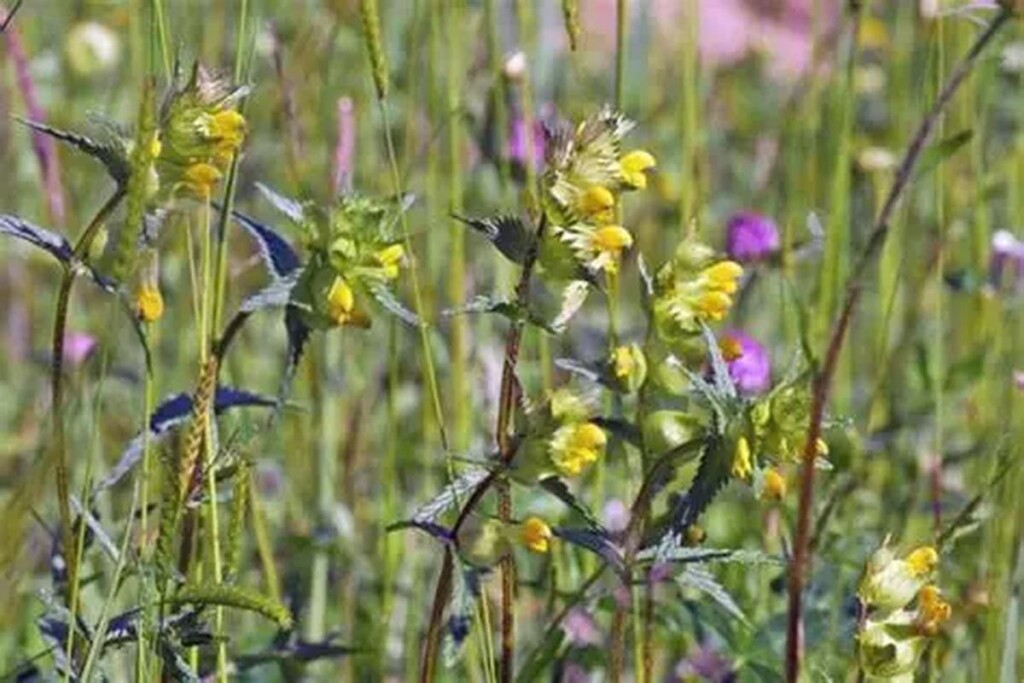
A meadow of yellow rattle – credit Diverse Gardens UK, CC 4.0.
nnIn west England, a series of hills cloaked in heather and wildflowers are the target of a national restoration project that is already seeing success.nnSimilar to the story GNN reported on last week about the rewilding along the south coast and South Downs National Park, Sussex, volunteers are seeding old hay fields with native wildflowers and replanting traditional hedgerows to ensure wildlife can move freely through the region.nnThe region is called the Shropshire Hills, which by British law is designated an Area of Outstanding Natural Beauty, and is managed and controlled so this beauty can endure. But while the area is indeed beautiful, the valley between the sections of hills known as Long Mynd and Stiperstones has for decades been under heavy hay cultivation, with farmers plowing up meadows and planting fast-growing commodity grasses.nnAs part of a project by the UK’s National Trust called Stepping Stones, volunteers have been working with landowners and local councils to turn some of these meadows back over to the wildlife, creating corridors of habitat to allow species like the bilberry bumblebee, pine marten, and curlews to move freely from hilltop to valley floor and back to hilltop.nnCharlie Bell, project manager for Stepping Stones, told the BBC that the project is one part of an overall mission that aims to restore 97% of meadows that have been lost in the UK over the last 100 years.nnMORE BRITISH RESTORATION: An Unloved English Field Restored to Beautiful Brook as Part of a Large Project to Glorify the River Isenn”Many old meadows have been plowed up and re-seeded with more productive mixes of grasses,” she told the national broadcaster. “Fertilizers are often added to increase the growth of these dominant productive grasses, at the expense of finer grass species and wildflowers.”nnJinlye Meadows, on the Long Mynd side of the valley, is now thriving with native wildflower species like mountain pansy, and volunteers have recorded the area is thriving with bilberry bumblebees which are rare and in decline.nnYOU MAY ALSO LIKE: ‘The Largest Environmental Restoration in History’ Continues to Restart the Heart of the EvergladesnnIn particular, the meadows were covered last year in yellow rattle, also known as the “meadowmaker,” a key part of Ms. Bell’s strategy for restoring meadows. This native species attaches itself to the roots of grasses, slowing, but not sabotaging, their growth. This allows not only the flower to grow, but space for all manner of other flowers to grow as the grasses’ growth is retarded.nnWATCH a video of the project from the National Trust… nn[raw] [/raw]nnSHARE This Beautiful Area Beautified With Your Friends From The Midlands… 

Share the Post:

Related Posts