
Children with Rare Birth Defect Are Breathing Easier with Device Made at Georgia Tech

credit – Children’s Healthcare of Atlanta
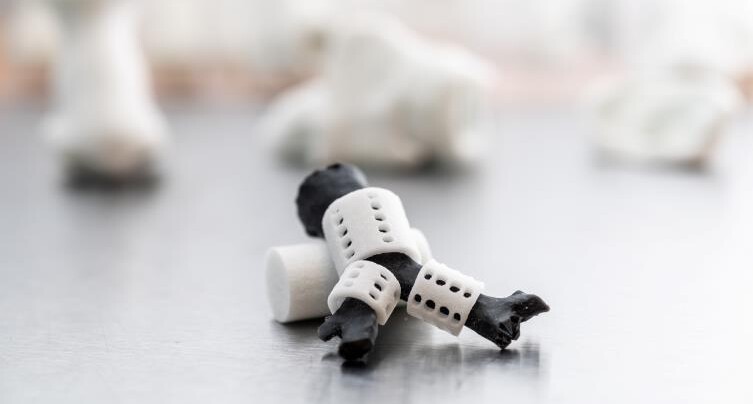
nnAt Georgia Tech, an incredible piece of biotechnology has cured one lucky child in a groundbreaking new treatment for a rare birth defect of the windpipe.nnPartnering with Children’s Healthcare of Atlanta, the invention is a 3D-printed tracheal splint, which has allowed 4-year-old Justice Altidore to leap into preschool with all the gusty enthusiasm of a normal child.nnAbout 1 in 2,100 children like Justice are born with tracheomalacia (TM), the most common inherited birth defect of the windpipe, according to the Cleveland Clinic.nnTM occurs when cartilage in the trachea, or windpipe, is weak or floppy, causing the windpipe’s walls to collapse and restrict breathing. Treatments are by no means a sure thing, and much of a child’s early life with TM involves labored breathing and being put on a ventilator.nnThe Georgia Tech splints are made of bioabsorbable material, and hold the trachea in place like a medic would splint a bone. The cartilage eventually develops, and the splints are ultimately absorbed.nnChildren’s pediatric cardiologist Dr. Kevin Maher and Dr. Steven Goudy, a pediatric otolaryngologist, oversaw Altidore and three other children receive custom tracheal splints for an FDA-approved expanded access trial.nnAll four have seen substantial improvements in their respiratory capabilities, and the unprecedented results suggest a new era of care for the narrow field has arrived.nnIt’s not the first time that 3D printing has been used to help tracheal recovery.nnCHILDREN’S DISEASE CURED: Teen with Incredibly Rare Genetic Condition is Cured in World First By British DoctorsnnIn March, GNN reported that a biotech company had become the first and only one in the world to produce a bio-3D-printed windpipe that was successfully transplanted into a human body.nnNasal stem cells and cartilage cells were obtained from other patients who underwent other procedures, and these were replicated and combined with polycaprolactone (PCL) for structural support as well as a special ink made from living cells to make the windpipe, or trachea.nnMORE INCREDIBLE BIOTECH: Incredible Internal Cochlear Implants on the Way as Massachusetts Engineers Overcame All ObstaclesnnThe transplant procedure was performed at St. Mary’s Hospital in Seoul on a woman in her 50s who lost part of her own trachea during thyroid removal surgery. The one-of-a-kind 3D printer, designed with over a decade of research and testing, was provided by the company T&R Biofab.nnSHARE These Incredible Stories Of Medical Tech With Your Friends… 

Share the Post:

Related Posts