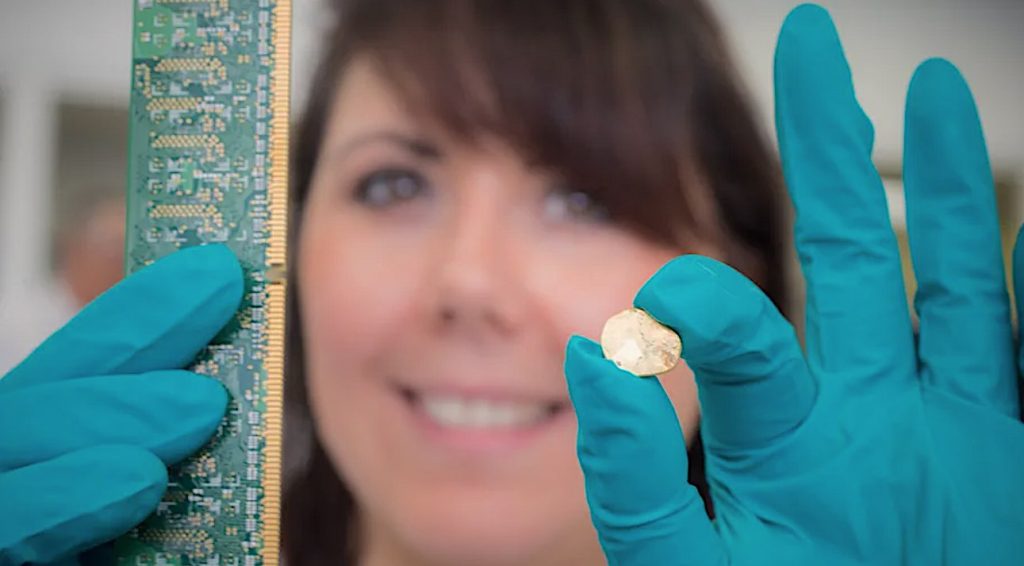
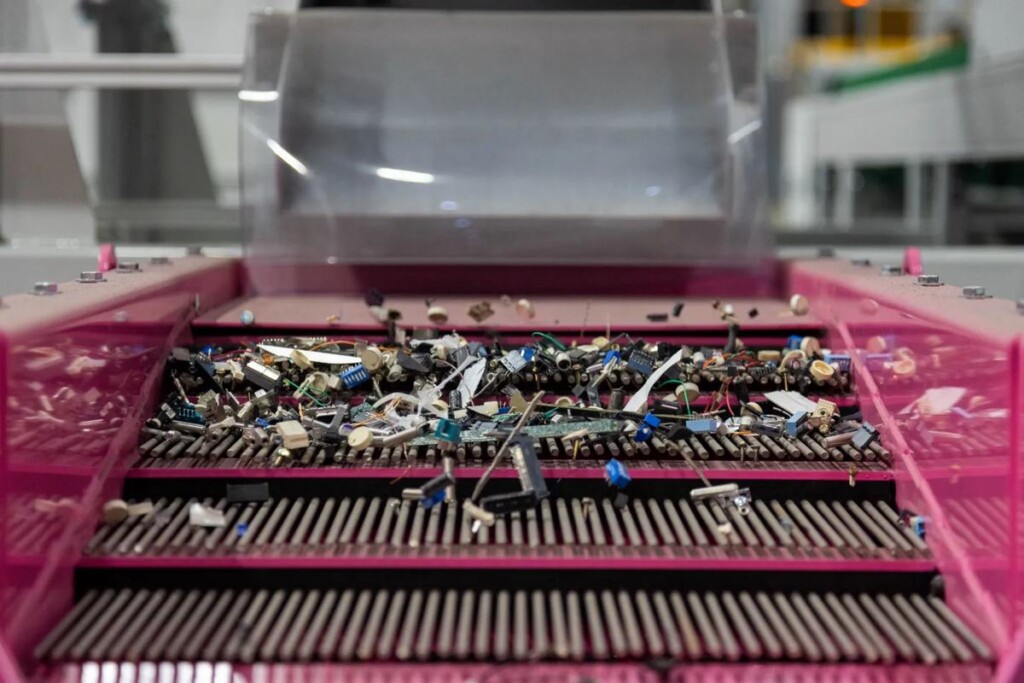
Credit: British Royal MintnnIn 2022, GNN reported that Britain’s Royal Mint began using a patented new chemical reaction to recover and reuse the gold, and other metals, within old circuit boards.nnNow, a large processing plant for recovering this gold is fully operational and boasts the capacity to break down 4,000 metric tons of circuit boards every year, amounting to hundreds of kilograms of gold.nnBut the really cool thing about the process is that the British government isn’t pocketing the gold, but rather minting standardized gold coins to back shares of an electronically traded gold bouillon fund that allows investors to diversify into gold without any environmentally damaging mining activities taking place.nnFrom investing your dollars in public solar energy companies to literally buying shares of carbon offset programs in the carbon market, there are a lot of ways of trying to ensure your green stays green.nnIn this case however, you have the option of turning your green into green gold, after the Royal Mint partnered with Quintet Private Bank to release the ETF on the London Stock Exchange under the ticker RMAU.nnBut the Mint still needed masses of recycled gold for the offering. In 2022, GNN reported that construction of a new plant in South Wales would be up and running in 2023. Albeit a tad late, the Llantrisant plant is now fully operational.nnA United Nations report on electronic waste estimated that 62 million metric tons of old laptops, phones, computers, television sets, and more were thrown out in 2022 alone. Contained within all of these devices are sensitive electronic components lined with precious and industrial minerals like gold, copper, cobalt, and others.nnGold has myriad uses in the medical, aerospace, and manufacturing sectors aside from its obvious function as jewelry and investing, but it’s hard to find and typically involves environmentally destructive mining operations.nnAt the Llantrisant plant in South Wales, piles of circuit boards are collected in tubs before being baked until the delicate mounts warp, and the components, including coils, transistors, chips, and capacitors, detach and fall off. A conveyor belt moves them along a series of robotic arms that sort, sieve, and chop them up according to material.nncredit – Royal MintnnThose that contain gold are separated and dumped in a chemical solution that leeches the gold from the other materials.nnCOMBATING E-WASTE AROUND THE WEST: n
nThe recovered gold is in the form of fine dust, which only needs to be heated to be reformed into coins or ingots.nn“Traditional gold recovery processes are very energy intensive and use very toxic chemicals that can only be used once, or they go to high energy smelters and they’re basically burnt,” Leighton John, the Royal Mint’s operations director, told BBC.nn“The groundbreaking thing for us is the fact that this chemistry is used at room temperature, at very low energy, it’s recyclable and pulls gold really quickly.”nnJohn adds that up until recently almost all this waste was shipped overseas, but now it’s being processed more and more in the UK, and the valuable resources, which ironically also have to be bought overseas, are remaining in the country.nnGold was in the news a few months back after making a new all-time record high against the US dollar. It rose sharply from a 52-week moving average of just under $1,900 an ounce to between $2,300 and $2,450 per ounce. After experiencing what was perceived to be multiple market corrections or pullbacks, the new price range seemed to hold.nnSHARE This Awesome Green Gold Mining Process With Your Friends…