188 years ago today, the city of Melbourne was founded in southeast Australia. A traditional meeting place of several Aboriginal peoples including the Boonwurrung, Wathaurong, and Wurundjeri peoples, Melbourne blossomed rapidly into a “canvas city” following the designation of a crown colony in 1837, and news of a gold rush in 1850. Melbourne today is the largest city in Australia, and consistently ranks among the most liveable in the world. READ more about the city… (1835)nnnn
- n
- Two yankee businessmen—brothers Augustus and John Kirby Allen—bought 8,850 acres of swampland and founded the city of Houston, Texas, funding the roads and buildings at the core of what would become the fourth most populous city in the US—and one that recently moved 4,100 homeless veterans into permanent housing (1836)
- A Communication Hotline between U.S. and Soviet leaders went into operation (1963)
- The album Highway 61 Revisited by Bob Dylan was released (1965)
- Striking Polish workers of the Solidarity movement led by Lech Walesa won a sweeping victory after a two-month battle with their communist rulers for the right to organize independent unions and the right to strike (1980)
- Former Air Force Colonel Guion S. Bluford Jr. was launched into space on the Shuttle Challenger and became the first black astronaut (1983)
n
n
n
n
n
n32 years ago today, Michael Schumacher’s reign of excellence began after taking the first of what would become 91 1st place finishes throughout his illustrious career. Described as “by far and away” his favorite track, Schumacher won the Belgian Grand Prix at Spa-Francorchamps circuit, the same track on which he made his official debut with racing team Jordan.nn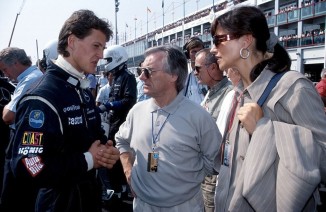
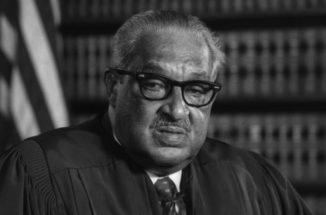 He was best known for the high success rate achieved when he argued before the highest court in the land— particularly the victory in Brown v. Board of Education, a 1954 decision that ruled segregated public schools to be unconstitutional. Born in Baltimore, Maryland and descended from slaves, his middle-class parents instilled in him “an appreciation for the United States Constitution and the rule of law.”nn
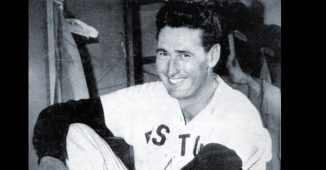 nnAnd, on this day in 1918, perhaps the greatest baseball hitter of all time was born. Playing his career with the Boston Red Sox, Ted Williams was one of only two athletes ever to win two Triple Crowns (leading a league in batting average, home runs, and runs batted in). His career on-base percentage, .482, was the highest of all time. No player since Williams in 1941 has posted a batting average, over .400 in a season. He missed five prime years on the field because he chose to serve in WWII and the Korean War as a bomber pilot. Upon his return to sports at age 39 and 40, he was the AL batting champion for the fifth and sixth time. He wrote a book called, The Science of Hitting, and was featured on PBS’s American Masters series.nn
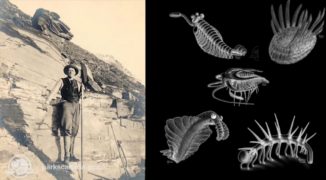 115 years ago today, the American paleontologist and geologist Charles Walcott discovered a treasure trove of fossils in the Burgess Shale tucked high in the Canadian Rockies. Famous today for having perfectly preserved the soft parts of its half-billion-year-old fossils (Middle Cambrian), the limestone deposit is one of the earliest fossil beds of its kind.nnThe 59-year-old former administrator of the Smithsonian Institution returned the following year to establish a quarry on the flanks of Fossil Ridge and uncovered a plethora of organisms new to science. In 15 years he had amassed over 65,000 specimens from the area, including imprints of animals with bizarre anatomical features that only slightly resembled other known species, including the Opabinia, with five eyes and a snout like a vacuum cleaner hose.nnDescribing all the fossils—which were created when the land mass was still part of a massive underwater reef in the Pacific Ocean—remained a vast task that Walcott pursued until his death 17 years later. WATCH a video of “the world’s most important fossil find”… (1909)nn[raw][/raw]nnSHARE The Milestones, Memories, and Birthdays…