Why it’s important
nToday, searching for species by taxonomy is an invaluable resource for scientists studying life on Earth. Regardless of the scientist’s spoken language, they can communicate with each other, read inventories and papers, and conduct research, all in Latin—as taxonomy uses Latin exclusively.nnPlants, birds, and especially fungi, often take on numerous colloquial names by local cultures, causing confusion as groups of people in the same country—even using the same language—will give different nicknames to the same species.nn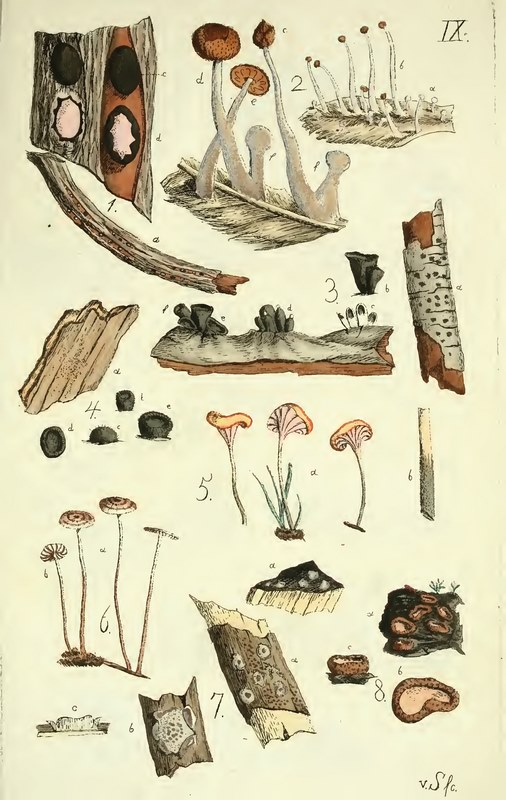
- n
- Stanford Designer is Making Bricks Out of Fast-Growing Mushrooms That Are Stronger than Concrete
- The Myriad of Massive Health Benefits in 6 Different Kinds of Mushrooms
- Scientists Have Used Mushrooms to Make Biodegradable Computer Chip Parts
- Porcini Mushrooms Rank Among Highest in the World for Rare ‘Essential Vitamin’
- Mushrooms Help Turn Toxic Brownfields into Blooming Meadows
n
n
n
n
n
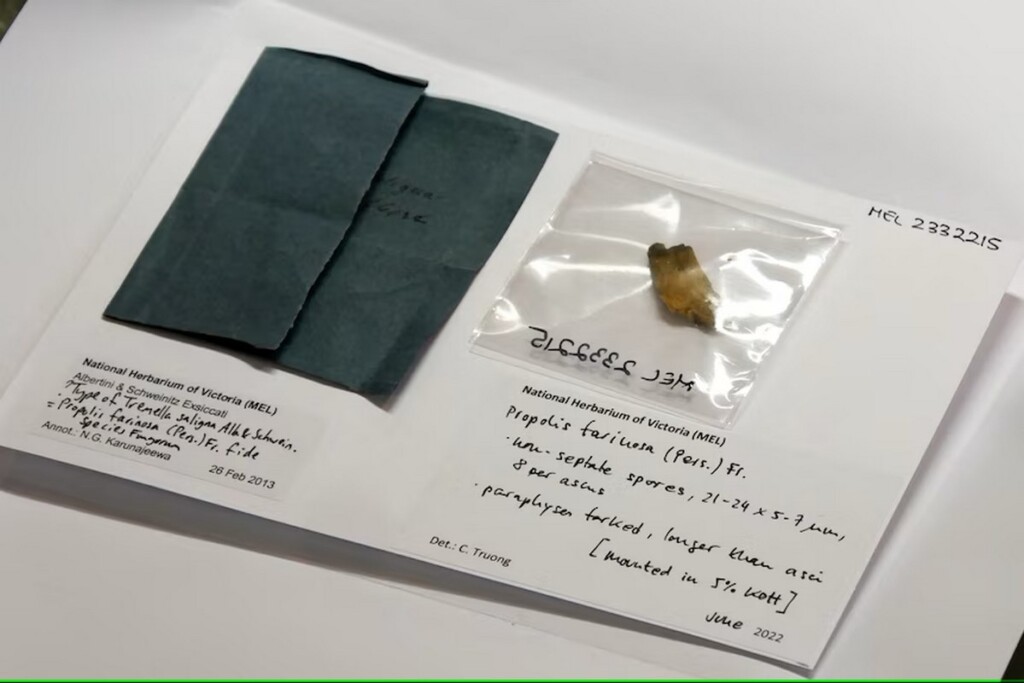
nFor that reason, May had to travel to the USA and Germany to confer with scientists about whether the specimen held in the Herbarium was the same as in the book. In Germany however, he found a handwritten list created by one of the book’s authors: Johannes Baptista von Albertini.nn”We were thrilled to see that the handwritten names in Albertini’s list and on the specimens exactly matched,” Dr. May said.nnSure enough, the species had been catalogued even before Albertini’s 1805 publication as Propolis farinosa. ABC News described it as being like a phone book with the same person listed at two different addresses and numbers. Whoever logged it in the National Herbarium back in 1883 had taken the name from Albertini’s publication, one which mycology more broadly, had left behind.nnThe species has now been described, genetically mapped, and unified internationally as P. farinosa. Dr. May has also been recognized internationally, and inducted as a Fellow into the International Mycological Association for his outstanding contributions to mycology.nnThere are 150,000 species of described fungi, but there may be as many as 3.5 million out there yet to be discovered. Fungi—which contain both the lifeforms that produce mushrooms and molds—are thought to represent a pharmacological gold mine. Having already provided a little something called “penicillin” to medical science, fungi show strong natural anticancer effects—and mycologists like Dr. May say it is a key area to search for new medicines.nnSHARE This Wonderful Story Of A Passionate Man’s Work For The Benefit Of Humanity…